© Stuart Pearl 2011 -
"Luminaries Watching" - Click on Image to Enlarge
What makes a good photograph? How does an image create interest? Photographers strive for impact. This is the stopping power that draws a viewer in. Hopefully the picture generates questions and some sense of wonder.
Perhaps the judge for the
Butler Museum 75th National Midyear Competition considered these notions when he chose my photo to hang in this year's exhibition. Or maybe he just liked the colors. Either way I was happy to be selected for the 2011 exhibit. It runs from June 28 - August 28.
Successful images are unique in their composition. Sometimes a photographer can take a common everyday view and turn it into a mystery. Or he may crop a mundane scene in a way that displays strange or unfamiliar shapes. This is part of the challenge faced by the photographer who is always honing his craft.
Cleveland is ripe with fascinating imagery. It's just a matter of spotting visual opportunities and combining the right elements of timing, light and composition. Done creatively, the viewer will pause and reflect on what is before him.
I'm a big fan of public art. I believe a city needs these efforts to soften its rough edges and provide counterpoint to the massive concrete structures and asphalt rivers. And Cleveland is fortunate to have a number of these public art gems. I discovered this one last year at Playhouse Square near
WVIZ/WCPN Ideastream. It is "
Chorus Line Luminaries" by urban designer and public artist
Stephen Manka. His sculpture marks the Playhouse Square RTA bus stop.
Last year while doing some volunter photography for Ideastream, Luminaries' flashing lights caught
my attention. It made me pause and wonder: "Now
that's really interesting... what is it doing? Is their a rythm to the lighting. Now what if I waited for a different sequence of lights and aimed my lens at this angle...."
 © Stuart Pearl 2011 - Click on Image to Enlarge
 There are Cleveland landmarks mixed with images of Chincoteague ponies. Views of the New River Gorge hang opposite the Appalacian trail. And a last view of the old Cleveland Cold Storage building shows it's crumbling detail.
 Carl Finer viewing gallery images




 Bridges have always fascinated me. As a young boy my brother and I would build them in our backyard, digging roads with our Tonka trucks, and creating rivers and lakes with the garden hose.
  My brother Arnold and cousin Alan building cities in the "Dirt Place" in 1960.


 The first of 14 massive bridge piers are now being built across the Flats valley which will support the new twin Inner Belt bridges. Steel piles are being driven about 200 feet down to bedrock to provide anchor points for each of the piers. Each steel pile is 55 feet in length and weighs about 12,000 pounds.

 Concrete and rebar base of brige pier.
 Worker in "pier pit."
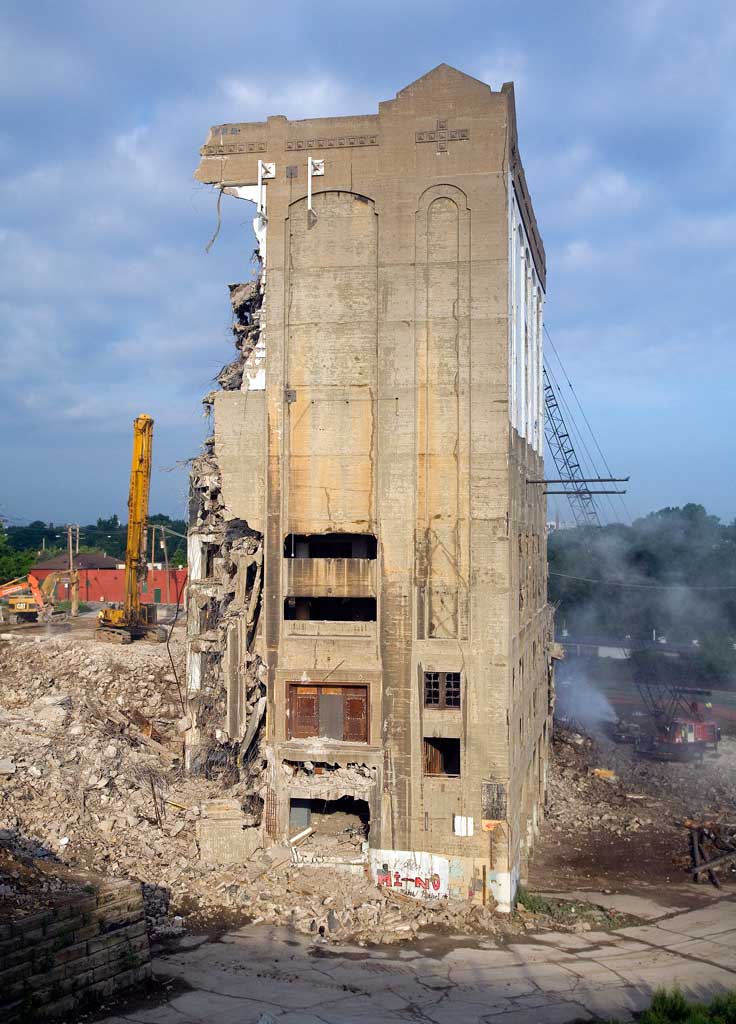
 The old Cleveland Cold Storage building sits on the west bank of the Cuyahoga and is an early casualty of the construction. It sits directly in the path of the Tremont landing spot for the bridge. Built in 1927-1928 it was a huge insulated storage facility that was used for food distribution throughout the city. It played a major role in Cleveland's food services industry.
 The present bridge carries about 119,000 cars each day. Sometimes a lone cyclist will brave the narrow metal sidewalk . When this man rode by, there was barely room for me to squeeze up against the railing while staring at the Cuyahoga river 273 feet below. I really don't like heights.
 Storm coming up from the South of the Innerbelt and Hope Memorial bridges.


 A similar view shot at 2:25 P.M. on Feb. 14.

 The "Grandma Tree" seen from my Front Door

 Posts
Posts